“Potrebbe sembrare una delle tante storie sul diritto all’abitare, ma non è affatto così”
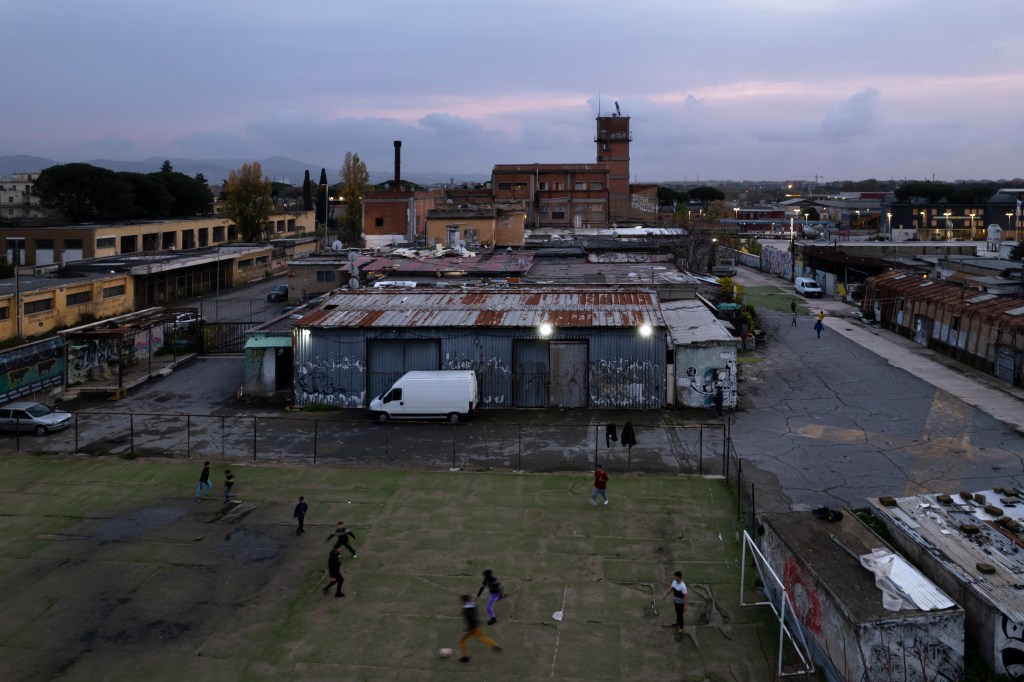
Quella del Metropoliz ha inizio a Roma, nel 2009, quando circa duecento persone, composte in sessantuno famiglie, hanno occupato un ex fabbrica di salumi (Fiorucci), abbandonata nel 1978, un sito di circa 19.000 mq in Via Prenestina. Una struttura fatiscente, che sembra un fortino con tanto di torre d’avvistamento, alla periferia est della città, oltre i quartieri popolari di Tor Sapienza e Centocelle.Sembra un modo per dire, alla città, che li spinge ai margini, che è diventata una metropoli espulsiva e ostile.
Le etnie sono aggregate in due gruppi principali: Magrebini, Africani ( Africa nera), Sudamericani, che hanno occupato gli edifici esterni sui piazzali della vecchia fabbrica; mentre l’etnia Rom, molto compatta e numerosa ha occupato i due piani superiori dell’edificio centrale. Dal 2009 i due gruppi hanno collaborato, lavorato sodo partendo dalle infrastrutture indispensabili, per poi diventare un’unica comunità meticcia, superando tensioni, anche grazie alla mediazione di un movimento per il diritto all’abitare.
L’immigrazione irregolare, l’occupazione abusiva, non consente alcun diritto a molti degli abitanti del Metropoliz: ad esempio questi non hanno accesso alla sanità pubblica. Sono le associazioni di volontari che si adoperano quotidianamente a garantire i servizi basilari, come appunto quello medico, o il doposcuola ai ragazzi.
All’interno di questo grande manufatto e grazie all’opera di un curatore museale, sensibile alla causa, sono stati coinvolti artisti affermati che iniziano a realizzare opere sulle pareti dell’edificio e di lì a poco lo trasformano nel museo a cielo aperto di una “città meticcia” che muove i primi passi per farsi comunità. Una comunità unita intorno all’esigenza di rivendicare a gran voce i propri diritti civili, in primis quello di avere un tetto sulla testa.
L’obiettivo è creare una barricata d’arte a difesa del Metropoliz e dei suoi abitanti, contribuire a riqualificarne gli spazi comuni, combattere l’effetto enclave di un luogo che per proteggersi deve chiudersi un cancello alle spalle.
E’ per questo che il Sabato mattina il Metropoliz apre le porte a coloro che vogliono visitare il primo museo abitato al mondo.
E che spiazza, facendo vacillare le certezze, e i pregiudizi, di chi viene a vedere come si vive in una occupazione e non immagina di trovarsi circondato da un esercito di opere d’arte, come di quanti vengono a visitare un museo e non si aspettano i panni stesi, il vociare dei bambini e l’odore del cucinato.
Nel 2021 il comune di Roma ha censito 195 edifici e siti abbandonati: il 44,6% di proprietà privata, il 15,9% di proprietà del comune, il 27,2% di proprietà dello stato. Tuttavia fino a quel momento poco era stato fatto per rendere disponibili queste strutture alle famiglie disagiate.
Molta strada ha fatto invece il Metropoliz in questi quindici anni,
eppure, la spada di Damocle dello sgombero coatto grava sempre più minacciosa su questa realtà unica e probabilmente irripetibile. Una sentenza del tribunale di Roma ha portato il Metropoliz in testa alla lista degli sgomberi.
Per proteggersi, questa comunità ha deciso di candidare a bene immateriale dell’UNESCO. La campagna NUNESCO con cui giocosamente il museo ha presentato la propria candidatura.
Il Comune di Roma si è recentemente impegnato ad acquistare e bonificare l’immobile, salvaguardare il museo e costruire abitazioni popolari da consegnare anche agli abitanti.
ENGLISH VERSION
“It might seem like one of the many stories about the right to housing, but it’s not at all”
The story of Metropoliz begins in Rome in 2009 when about two hundred people, forming sixty-one families, occupied a former cold cuts factory (Fiorucci), abandoned in 1978, a site of about 19,000 square meters in Via Prenestina. A dilapidated structure, resembling a fortress with a watchtower, on the eastern outskirts of the city, beyond the working-class neighborhoods of Tor Sapienza and Centocelle. It seems like a way to tell the city, which pushes them to the margins, that it has become an expulsive and hostile metropolis. Ethnic groups are grouped into two main groups: Maghrebis, Africans (Black Africans), South Americans, who have occupied the outer buildings on the courtyards of the old factory; while the Romani ethnicity, very compact and numerous, has occupied the two upper floors of the central building. Since 2009, the two groups have collaborated, working hard starting from the indispensable infrastructure, to then become a single mixed community, overcoming tensions, also thanks to the mediation of a movement for the right to housing. Irregular immigration, squatting, does not grant any rights to many of the Metropoliz inhabitants: for example, they do not have access to public health care. It is volunteer associations that work daily to guarantee basic services, such as medical care, or after-school programs for children. Inside this large structure, thanks to the work of a museum curator, sensitive to the cause, established artists have been involved who begin to create works on the walls of the building and shortly thereafter transform it into the open-air museum of a “mixed city” taking its first steps towards becoming a community. A community united around the need to loudly claim their civil rights, first and foremost the right to have a roof over their heads. The goal is to create an art barricade to defend Metropoliz and its inhabitants, contribute to requalifying the common spaces, fight the enclave effect of a place that to protect itself must close a gate behind it. That’s why on Saturday mornings Metropoliz opens its doors to those who want to visit the world’s first inhabited museum. And that disorients, shaking the certainties, and prejudices, of those who come to see what life is like in an occupation and don’t expect to find themselves surrounded by an army of works of art, like those who come to visit a museum and don’t expect to see laundry hanging out, children playing, and the smell of cooking. In 2021, the Municipality of Rome surveyed 195 abandoned buildings and sites: 44.6% privately owned, 15.9% owned by the municipality, 27.2% owned by the state. However, little had been done up to that point to make these structures available to disadvantaged families. Metropoliz has made a lot of progress in these fifteen years, yet the Damocles’ sword of forced eviction hangs ever more threateningly over this unique and probably unrepeatable reality. A ruling by the Rome court has put Metropoliz at the top of the eviction list. To protect themselves, this community has decided to apply the Metropoliz for UNESCO intangible heritage status. The “NUNESCO” (in roman slang means “I do not go out.”) campaign with which the museum playfully presented its candidacy. The Municipality of Rome has recently committed to purchasing and remediating the property, safeguarding the museum, and building affordable housing to be handed over to the inhabitants as well.
 ventottomillimetri
Lascia un commento